Will DJI Air 4 and Mini 6 Pro Be Sold in the US? FCC Rules Explained


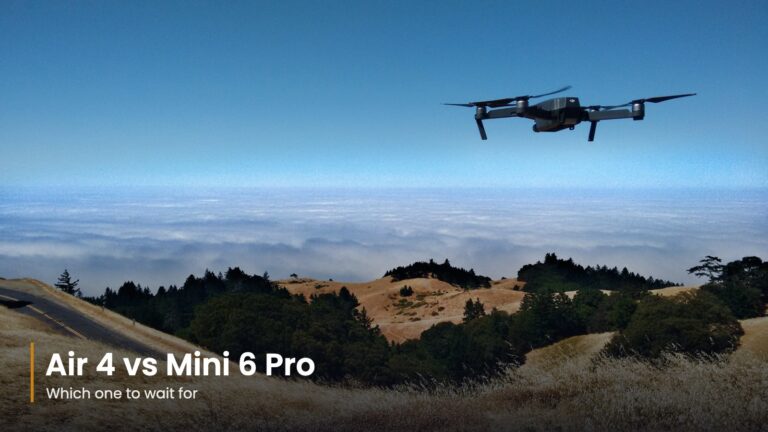
Nobody can say yet whether the DJI Air 4 or Mini 6 Pro will be sold in the US, and the honest default is to assume they won’t be until proven otherwise. As of 22 October 2026, DJI has announced neither drone. There is no US release date, DJI Store listing, US price or publicly identified FCC equipment authorization for either one.
The bigger obstacle is regulatory. In December 2025 the US changed its equipment-authorization rules for foreign-produced drones, and that makes it far harder for any future DJI aircraft to get the FCC approval normally needed before a wireless product can be imported, marketed or sold here. The same freeze has since spread from aircraft to DJI’s cameras and audio gear; we tracked it product by product in this look at DJI’s shrinking US catalog.
None of this makes existing DJI drones illegal. Models that already had FCC authorization were not automatically banned, and you can keep flying a drone you bought lawfully. The open question is about new models that need new authorization. If you want the status of a model that already exists, our US drone ban checker covers the Neo 2, Mini 5 Pro, the Agras range and more.
Table of Contents
What the FCC changed
On December 22, 2025, the FCC added foreign-produced uncrewed aircraft systems and critical drone components to its Covered List. Equipment on that list generally cannot receive new FCC equipment authorization, which most wireless products need before they can be imported, marketed or sold in the US.
The FCC spelled out the effect: new covered models are blocked from the normal authorization route, while models authorized earlier were not automatically prohibited and consumers can keep using drones they lawfully bought. It is not a switch that grounds every DJI aircraft already here. You still have to follow the usual operating, registration, Remote ID and airspace rules, and the restriction applies to foreign-produced drones broadly, not only to DJI.
“Critical components” is a wide definition. It covers data-transmission devices, communications systems, flight controllers, ground stations and remote controllers, navigation systems, sensors and cameras, batteries and battery-management systems, motors and associated software. So the issue is not limited to the airframe.
The exceptions, and why none fits yet
The FCC recognizes several categories outside the broad restriction:
- systems on the Blue UAS Cleared List
- qualifying domestic end products under the Buy American Standard
- devices granted a specific Conditional Approval
- foreign-produced products classified under the FCC’s toy-drone exemption
In July 2026 the FCC extended the Blue UAS and domestic-end-product exemptions through January 1, 2028. It also clarified that Conditional Approvals can continue while an applicant follows its approved onshoring plan and stays subject to updated government vetting.
A Conditional Approval is the most plausible theoretical route. It involves a national-security review, is not automatic, can come with conditions, may require continued compliance, and can be withdrawn if an applicant breaks its plan or makes material misrepresentations. There is no public evidence that the DJI Air 4 or DJI Mini 6 Pro has one. And since both are expected to be advanced camera drones, the toy-drone exemption should not be assumed to apply.
Could existing DJI models be restricted later?
The FCC has created procedures to review certain previously authorized covered equipment and potentially limit further importation or marketing. A July 17, 2026 proceeding named specific brands and XAG equipment for possible restrictions, including Cogito, Fikaxo, Lyno Dynamics, Skyhigh Tech, Spatial Hover, SZ Knowact, WaveGo and XAG. It did not list DJI’s mainstream consumer models.
A separate proceeding covers previously authorized military-grade UAS and critical components. That proposal says it would not apply to non-military-grade UAS and would not stop consumers from operating systems they already own. The rules are still moving, but not every new FCC drone notice is a ban on consumer DJI aircraft.
How real is the Air 4?
More real than the Mini 6 Pro, but still unconfirmed. In May 2026 the Air 4 name reportedly appeared in a Chinese flight-reporting app alongside existing aircraft, and a later report said it had also shown up in a Chinese certification database. That supports the idea that DJI is building an Air 3S successor. It confirms nothing about specs, weight, battery, transmission, price, release date, an FCC ID or US availability.
Chinese certification and FCC authorization are separate processes. A launch in China or elsewhere would not resolve the US problem. For a normal US retail launch, the Air 4 would need an authorization route: one granted before the cutoff, a Conditional Approval, a finding that it isn’t covered, a qualifying exemption, a change in FCC policy, a successful legal or administrative challenge, or a US-focused production arrangement that meets the requirements. None has been publicly documented.
The Mini 6 Pro has even less behind it
There is no verified DJI announcement or product page, no FCC filing or Chinese certification record clearly tied to the name, no European class certificate, manual, battery label, packaging, production photo or US store listing. DJI’s current compact flagship is the Mini 5 Pro, shown on its site with a 1-inch camera and obstacle sensing. Until stronger evidence appears, treat the Mini 6 Pro as product-cycle speculation.
Even if DJI announces it globally, that would not mean official US sales. The signs to look for are a verifiable FCC ID, a DJI US product page or launch announcement, an authorized US retailer listing, a published Conditional Approval, or a government determination covering the model.
A new name would not fix it
Rebranding alone would not solve the FCC problem. Authorization depends on the device, manufacturer, production origin, critical components and regulatory declarations, not the brand printed on the box. In its July 2026 proceedings the FCC specifically discussed white-labeled aircraft and equipment that substantially rely on the design, manufacturing, assembly or development of covered entities.
Should you buy a current DJI drone now?
Previously authorized models can still legally be sold, but legal and available are different things. Stock, import delays, retailer decisions, discontinued production, regional packages, warranty limits, resale prices and parts supply all affect whether you can actually get one.
My advice is simple: if you need a drone for a trip, a project or paid work, buy a currently available, properly authorized model. An unannounced product can’t shoot anything. Wait only if your current drone already does the job and you can accept that the Air 4 or Mini 6 Pro may launch late, cost more than expected, or never reach normal US retail.
The Air 3S is a documented, existing dual-camera drone, and the possibility of an Air 4 doesn’t take anything away from it. Waiting makes sense mainly if you already own a capable aircraft and owning the newest model matters more to you than flying now. The same logic applies to the Mini line: waiting is reasonable for Mini 4 Pro or Mini 5 Pro owners whose drones still perform well. First-time buyers, travelers with trips coming up, people replacing a much older Mini and professionals who will use it immediately are better off buying now, after checking that the specific Mini 5 Pro package is authorized, available and covered by the right regional warranty.
Don’t put off a purchase because of rumored specs either: dual 1-inch cameras or a sub-250 g Air 4, 6K video on the Mini 6 Pro, O5 transmission, a variable aperture, a 60-minute battery. None of it changes the FCC situation.
Before you order
Check the exact model name and FCC ID, its US authorization status, the seller’s location, warranty region and return policy, DJI account activation status, whether it is new, refurbished or used, the included controller, the number and type of batteries, the regional transmission configuration, parts availability, DJI Care eligibility, and whether it is an unofficial import.
Be wary of listings that promise an Air 4 or Mini 6 Pro before DJI announces it, ask for a large preorder deposit, use concept renders as product photos, claim guaranteed US delivery without an FCC ID, advertise unsupported specs, or offer only an overseas warranty. Don’t assume that importing an international unit yourself is lawful either; confirm FCC authorization, customs rules, radio configuration and Remote ID support for the exact product first.
This article is based on official FCC public notices, Covered List guidance and equipment-authorization documents, DJI’s official product and newsroom pages, and published reports on the Air 4’s reported Chinese database appearances. We did not find a public FCC authorization, Conditional Approval, DJI US launch announcement or official US retail listing for either model. This is general reporting, not legal advice. Last verified: August 4, 2026.
The Friday Brief
One email a week on what changed in drones
FCC and FAA rule changes, DJI leaks checked against filings, and the week’s new comparisons. Every Friday, nothing else.
Free. Unsubscribe in one click. Sent with Kit; see our privacy policy.
Follow us on Google too: add Drone Ranker as a preferred source →
Continue Reading
All News